GNEISS.io and the Case for Making Digital Ownership Easier to Use
Why Michael Morton Believes Accessibility May Be Blockchain’s Most Important Challenge
The blockchain industry has never lacked ambition.
Over the past decade, entrepreneurs, developers, and investors have spoken confidently about decentralisation, digital ownership, and the possibility of creating entirely new ways for people to exchange value online. The technology has evolved rapidly, attracting attention from businesses, financial institutions, creators, and technology leaders around the world.
Yet despite the innovation, a familiar challenge has persisted.
For many people, blockchain still feels difficult to navigate.
The promise of digital ownership has generated significant interest, but understanding how to participate has often required a level of technical knowledge that sits outside the comfort zone of most users. While industry insiders became fluent in wallets, smart contracts, and tokenised assets, many potential users remained on the sidelines.
It was this gap between possibility and practicality that stood out to Michael Morton.
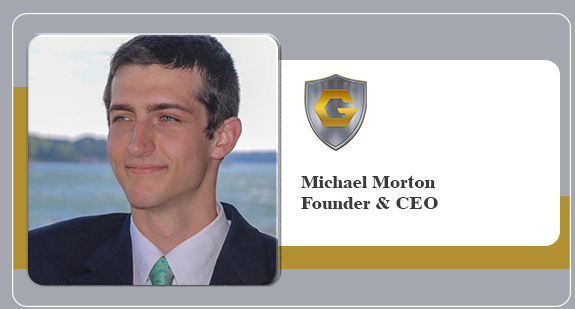
As Founder of GNEISS.io, Morton saw an industry producing increasingly sophisticated technology while still struggling to make that technology approachable for a broader audience. The issue, in his view, was not a lack of innovation. It was a lack of accessibility.

Looking at the Market Differently
When discussions around blockchain began gaining momentum, much of the attention focused on technical advancement.
Projects competed to develop faster networks, more advanced infrastructure, and increasingly complex ecosystems. While these developments played an important role in moving the sector forward, they also created an environment where many platforms were designed primarily for people who already understood the technology.
Morton believed something was being overlooked.
The wider market was not necessarily searching for more complexity. What many people wanted was a straightforward way to participate in digital ownership without first becoming blockchain specialists.
That observation became one of the foundations behind GNEISS.io.
Rather than positioning itself around technical sophistication alone, the company focused on creating a peer-to-peer environment where users could create, manage, transfer, and exchange digital assets through a more intuitive experience.
The thinking was simple: if digital ownership was going to become part of everyday life, the process needed to feel familiar rather than intimidating.
“People are interested in the benefits of ownership. They are not necessarily interested in mastering the technical language that surrounds it.”
Building Through Changing Market Conditions
Few sectors have experienced the same level of volatility as blockchain.
Periods of extraordinary enthusiasm have often been followed by equally challenging corrections. Businesses that appeared unstoppable during growth cycles have sometimes struggled when market sentiment shifted.
For companies operating in the space, maintaining credibility through these changes has become one of the industry’s defining tests.
Morton’s approach has centred on consistency rather than visibility.
While many projects pursued rapid expansion or headline-generating announcements, GNEISS.io concentrated on building its platform and refining its user experience. The company’s focus remained on developing infrastructure designed to serve users rather than chasing short-term attention.
This reflects a broader philosophy about how sustainable businesses are built.
Markets change. Trends change. Technologies continue to evolve.
The organisations that endure are usually those that continue creating value regardless of external conditions.
For GNEISS.io, that has meant prioritising product development, platform reliability, and user trust over temporary momentum.
Making Ownership More Than a Concept
Digital ownership has become one of the most discussed ideas within blockchain, yet it is often described in abstract terms.
For Morton, the concept is far more practical.
At its core, ownership is about control. It is about giving individuals the ability to manage, transfer, and interact with assets without unnecessary dependence on intermediaries.
That principle sits at the centre of GNEISS.io’s marketplace model.
The platform is designed to enable direct participation between users while allowing them to retain authority over their assets throughout the process. Rather than acting as a gatekeeper, the objective is to provide the infrastructure that supports secure peer-to-peer interaction.
The significance of this approach extends beyond cryptocurrency.
As digital assets continue to evolve, questions surrounding ownership, transparency, and user control are becoming increasingly relevant across multiple industries. Businesses are exploring new ways to manage value, creators are looking for more direct relationships with audiences, and consumers are becoming more aware of how their digital assets are handled.
In this environment, ownership becomes more than a technical feature. It becomes a business consideration.

The Role of Simplicity in Adoption
Technology history offers a consistent lesson.
Breakthrough innovations rarely become mainstream because people understand every aspect of the underlying infrastructure. They become mainstream when people find them useful and easy to access.
The internet expanded because it became easier to navigate.
Online banking gained acceptance because it became more convenient.
Digital payments became commonplace because they reduced friction.
Morton believes blockchain will follow a similar path.
The future of digital ownership may depend less on what the technology can do and more on how effectively businesses can remove barriers between users and the benefits it provides.
This is where GNEISS.io has chosen to concentrate its efforts.
The company has invested heavily in creating a user experience that removes unnecessary complexity while preserving the core principles of decentralisation and ownership. From onboarding to asset management, the emphasis has remained on making participation more accessible.
It is a strategy based on a simple belief: technology should expand opportunities, not create obstacles.
“Adoption happens when people feel comfortable using a product, not when they fully understand every technical detail behind it.”
Preparing for a Larger Shift
The conversation around tokenisation has expanded considerably in recent years.
What was once viewed as a niche area of the blockchain market is increasingly attracting interest from established businesses and institutions. Discussions now extend well beyond cryptocurrency and into areas such as intellectual property, real estate, commercial transactions, and digital commerce.
For Morton, this shift reinforces a point he has believed from the beginning.
The potential of digital ownership will only be realised if people can engage with it easily.
The technology itself is advancing rapidly. The next challenge is ensuring that participation keeps pace with innovation.
Platforms capable of simplifying access while maintaining security and control are likely to play an important role as adoption continues to grow.
A Practical Vision for the Future
There is no shortage of bold predictions surrounding blockchain.
Some focus on disruption. Others focus on transformation.
GNEISS.io approaches the conversation from a more practical perspective.
The company’s objective is not to make blockchain more complicated or exclusive. Instead, it is focused on helping users experience the advantages of digital ownership through a platform designed around accessibility and utility.
For Michael Morton, success will not be measured solely by technological advancement.
It will be measured by participation.
Because the long-term promise of digital ownership has never been about the technology itself.
It has always been about the people who use it.
And in a sector often defined by complexity, making that experience simpler may prove to be one of the most valuable contributions a company can make.