


Construction has never been short of challenges, but the pressure to deliver projects faster, more efficiently, and with greater cost certainty is changing how the industry approaches the work. For RPM Team, the answer lies in breaking away from the traditional, sequential construction model and bringing design, engineering, manufacturing, and project management into closer alignment.
At the heart of RPM Team’s approach is its Rapid Program Management (RPM) strategy, developed in response to a familiar problem in traditional construction: disconnected project participants. Owners, design teams, and contractors can often operate within separate silos, creating the conditions for change orders, finger-pointing, and schedule inflation. RPM Team addresses this missing link by creating a collaborative workflow that connects the different parts of a project from the beginning.
Rather than attempting to accelerate a project only after construction is underway, RPM builds speed into the process from day one. Engineering decisions are aligned with manufacturer capabilities, while project priorities remain connected to the owner’s operational goals. The result is an approach designed to make demanding schedules more predictable and achievable.

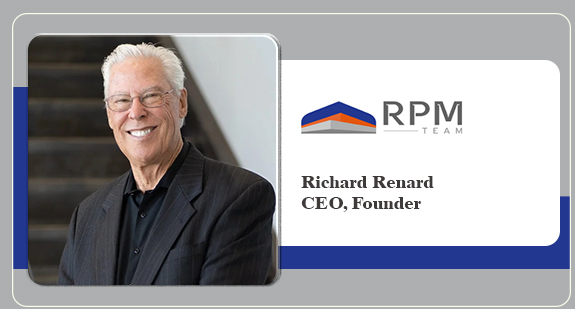
Richard Renard, CEO, Founder
Bringing the Right Expertise Together
One of the defining elements of RPM Team’s strategy is its integrated hybrid approach. Instead of relying on a single rigid project team or sole-source manufacturer, the company works through strategic alliances involving manufacturers, builders, and multidisciplinary engineering teams.
That flexibility makes it possible to bring specialized and available talent into a project when it is needed. At the same time, established relationships with manufacturers across pre-engineered metal buildings, tension fabric, and modular systems provide familiarity with off-site fabrication processes as well as competitive pricing.
The key difference is that multiple activities can move forward at the same time. Site design, entitlement coordination, and factory production can progress concurrently rather than waiting for one stage to finish before another begins. This combination of factory efficiency and custom site execution helps compress delivery schedules without losing sight of project requirements.

David Renard, President
Designing With Manufacturing in Mind
RPM Team’s Manufacturing-Led Design Process® takes this integration a step further. Traditional architectural design can sometimes be completed before a factory or general contractor is selected, leaving plans to be modified later. RPM reverses that sequence by bringing manufacturing considerations into the early design and engineering stages.
Factory specifications, structural tolerances, and material procurement constraints become part of the initial planning process. RPM collaborates with pre-engineered steel, panelized, tension-membrane, and volumetric modular manufacturers from the outset.
The goal is straightforward: design for the manufacturing floor rather than redesigning a project after manufacturing decisions have already been made. This approach helps engineering documents work with off-site fabrication requirements, code compliance, and rapid site assembly. It also reduces the possibility of late-stage revisions and change orders while shortening the path from concept to occupancy.
A Culture Built Around Urgency and Accountability
RPM Team’s culture is closely connected to the experience of its executive leadership and broader leadership team. Their backgrounds span rapid building manufacturing, structural engineering, and large-scale commercial development, with experience in rapid-deployment initiatives ranging from emergency COVID response facilities with the Army Corps of Engineers to more than two dozen navigation centers across the country.
Those experiences have shaped a culture focused on speed, accountability, and practical problem-solving. Rather than treating different disciplines as separate functions, RPM brings civil, structural, architectural, and project management expertise into close collaboration.
This multidisciplinary mindset allows the company to maintain its focus on the needs of project owners while tackling facilities that must be delivered under demanding deadlines.
Lessons From Housing and Navigation Centers
RPM Team’s work in housing and navigation centers has also influenced the way it views construction. Delivering shelter and supportive housing has reinforced an important lesson: project schedules are not always simply financial measurements. In situations involving urgent housing needs, speed can become a matter of human dignity and survival.
Working under disaster-response and acute housing-crisis conditions pushed RPM to develop faster deployment methods. Projects such as California’s first three-story shipping container navigation center in Stockton, along with rapid-deploy micro-communities, provided practical lessons that continue to influence the company’s wider work.
Concurrent site and factory workflows, early agency coordination, flexible interior layouts, and resilient structural systems are among the approaches shaped by these experiences. RPM now applies those lessons across municipal, commercial, and private developments.
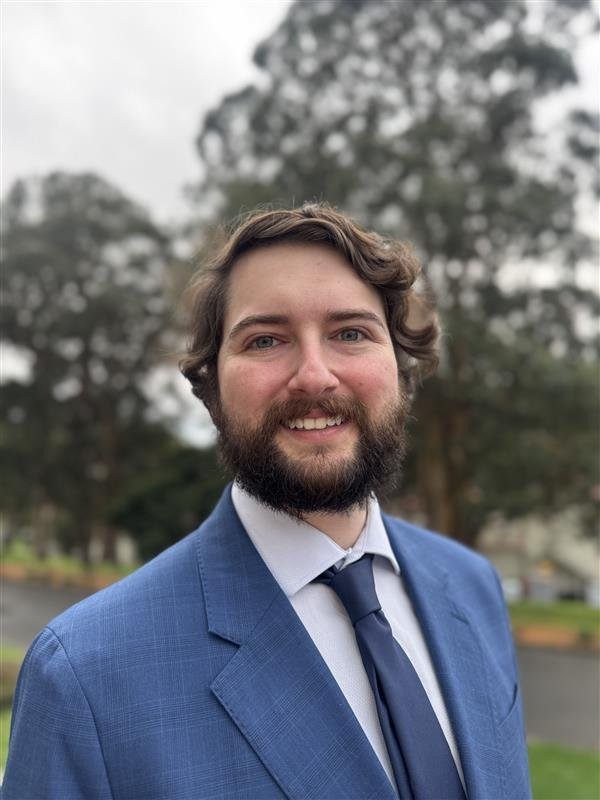
Ben Bronow, Vice President
Turning Diversity into Project Strength
Complex projects depend on more than individual technical expertise. They require different disciplines to understand how their decisions affect one another. RPM Team brings together capabilities spanning architecture, civil engineering, structural design, landscape architecture, program management, and factory procurement.
The team’s experience across different sides of the construction process—including work as owners, contractors, municipal consultants, and factory representatives—provides a broader understanding of project delivery. That perspective can help identify potential friction points earlier, translate technical requirements into practical strategies, and keep stakeholders aligned from site feasibility and entitlement through engineering, fabrication, inspection, and occupancy.
Preparing for a Faster, More Sustainable Industry
The construction industry is facing increasing pressure to build quicker, control costs, address skilled labor shortages, and meet environmental expectations. RPM Team sees its experience with accelerated construction methodologies as an important foundation for what comes next.
Its work with volumetric modular construction, pre-engineered metal buildings, tension-membrane structures, 3D-printed homes, and sustainable materials such as Insulated Concrete Forms (ICF) reflects a broader focus on efficiency and accelerated delivery.
For RPM Team, the future of construction is not simply about moving faster. It is about changing how projects are organized so that design, engineering, manufacturing, and execution work together from the beginning. By combining these capabilities, the company’s Rapid Program Management framework offers a practical approach to delivering complex projects under increasingly demanding timelines while pursuing greater efficiency, cost certainty, and sustainable execution.

Company Name : RPM TEAM
Website : https://rpm-team.com/
Management Team
Richard Renard | CEO & Founder
David Renard | President
Ben Bronow | Vice President

