



Pioneering the Future of Piezoelectric Innovation.
In an exclusive conversation with The CEO Viewpoint, the leaders of Microfine Materials Technologies (MMT) shared the company’s remarkable founding story, its pioneering role in piezoelectric crystal growth, and how it is shaping next-generation SONAR and underwater sensing solutions.
What is the founding story of Microfine Materials Technologies?
Microfine Materials Technologies (MMT) was founded as a tech startup at the National University of Singapore (NUS), initiated by a group of academic staff from the Department of Mechanical Engineering. The company began its journey with the support of an R&D grant from the National Science and Technology Board, now known as A*STAR. The founding team aimed to develop high value, advanced ceramic materials, initially exploring several options. Within the first two years, the team honed its focus on piezoelectric single crystals, particularly lead zinc niobate-lead titanate (PZN-PT) — a material known for its exceptional piezoelectric properties. PZN-PT had been recognized for its potential to transform piezoelectric applications but was notoriously difficult to grow in terms of both quality and size. Leveraging their prior expertise in growing optical crystals, the MMT team took on the challenge and succeeded in producing high-quality crystals. This breakthrough led to the development of various high performance piezoelectric devices, marking the beginning of MMT’s pioneering role in next-generation piezoelectric technology.
In what markets and industries does MMT operate?
Microfine Materials Technologies (MMT) operates primarily in the field of high-performance underwater transducer development and manufacturing. Its advanced solutions cater to a wide range of industries and markets where precision, reliability, and performance are critical. A key application area is underwater imaging, especially large-area high-efficiency imaging on unmanned underwater platforms including detecting and imaging buried objects beneath the seabed. MMT also plays an important role in the oil and gas sector, where its down-hole transducers are used for structural inspection to enhance safety, efficiency, and resource management in exploration and drilling activities. Beyond industrial applications, MMT provides high performance underwater sensors designed for defense and security purposes, such as underwater target detection, harbour surveillance, and coastal security operations. By addressing both industrial and security-related needs, MMT has positioned itself as a leader in supplying cutting-edge piezoelectric based technologies that support critical applications across multiple global markets.
Who are your strategic partners, investors, or key collaborations that help drive growth and innovation?
Microfine Materials Technologies (MMT) has built its growth and innovation on strong collaborations with both government agencies and global industry leaders. Since its inception, the company has received significant support from Singapore’s national funding bodies, including the National Science and Technology Board (now A*STAR), the FSTD, DSO, and DSTA. These partnerships have been crucial in advancing MMT’s R&D efforts and enabling it to serve as an original design manufacturer (ODM) for specialized underwater transducers and arrays tailored to the Singapore defense sector. On the commercial front, MMT works closely with leading international technology companies that recognize the value of its high-performance piezoelectric solutions. For example, its low-noise down-hole transducers are distributed worldwide through a Singapore-based of a subsidiary major global technology corporation, which manufactures a wide range of down-hole probes for the international market. Looking ahead, MMT is actively engaging with overseas technology leaders to explore collaborations on advanced SONAR arrays leveraging PZN PT single crystals, notably its new and novel acoustically-matched transmission-line-like single crystal transducer technology, also known as underwater sound emitting dot (UWSED) due to its small size, further strengthening its role as a key innovator in underwater transducer technologies.
Are there plans to expand manufacturing or R&D footprint beyond Singapore?
Microfine Materials Technologies (MMT) does not have immediate plans for rapid expansion of its manufacturing or R&D footprint beyond Singapore. The company remains focused technologically on relevant staying by continuing to strengthen its expertise and innovation capabilities within its home base. However, MMT is mindful of the high costs associated with manufacturing in Singapore, which can present challenges when scaling for broader commercial exploitation. With this in mind, the company has been actively considering the possibility of setting up manufacturing facilities overseas, particularly in regions that are closer to its key markets. Such a move would allow MMT to better align with customer needs, optimize production costs, and enhance its global competitiveness. While discussions and approaches from potential partners have already taken place, MMT is carefully evaluating these opportunities to ensure that any expansion aligns with its long-term vision, growth strategy, and commitment to delivering advanced piezoelectric technologies worldwide.
How do you define success for Microfine in the coming decade, and what milestones are you most focused on?
For Microfine Materials Technologies (MMT), success in the coming decade is defined by its ability to push the boundaries of piezoelectric technology and make a transformative impact on SONAR systems. Both co-founders, including Dr. Siak Piang LIM, are scientists at heart who are driven by a deep passion for innovation rather than traditional business metrics. Their primary goal is to see MMT’s single crystal transducers—especially its breakthrough single crystal UWSED transducer technology—play a key role in revolutionizing underwater sensing and SONAR applications. Over the next ten years, the company aims to achieve key milestones such as advancing the performance and adoption of its transducer technologies, forging collaborations with global technology leaders, and demonstrating the real-world impact of its innovations. For MMT, true success lies not just in commercial growth, but in delivering technologies that provide meaningful benefits to industries, defense, and scientific exploration—ultimately contributing positively to society and the advancement of global underwater capabilities.
Who comprises the senior leadership or technical team, and how do you attract and develop high skilled talent in crystal growth and transducer design?
Microfine Materials Technologies (MMT) operates with a compact but highly specialized team of fewer than 20 members, led by myself and Dr. S.P. Lim. Both of us, together with several colleagues from the National University of Singapore (NUS), drive the company’s technological vision through regular brainstorming sessions aimed at advancing the frontiers of crystal growth and transducer design. To strengthen our expertise, MMT collaborates with renowned universities and research institutions overseas, as well as technology leaders both locally and internationally. These collaborations ensure continuous knowledge exchange and keep the team at the cutting edge of innovation. Given our size, we are selective in the projects we take on, focusing on developments that align with both customer needs and our long-term vision. To meet increasing demand, MMT is also considering selective technology transfer on a case-by-case basis, including royalty agreements. This approach has been successful in the past, such as when we trained the entire technical team of the Singapore defense sector in single crystal growth and transducer R&D.
Who leads the company and what role did their leadership play in its development?

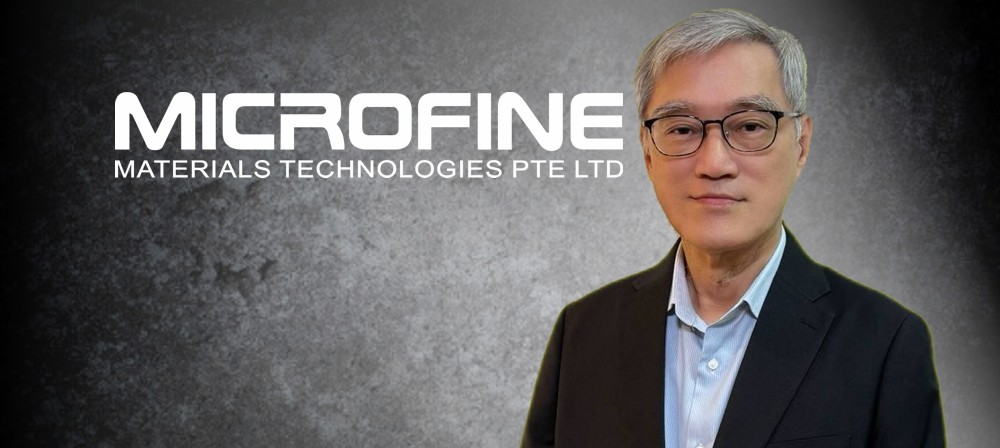
Microfine Materials Technologies (MMT) is led by its two technology leaders, myself and Dr. S.P. Lim, whose combined expertise has been central to the company’s success. I bring a background in Materials science, while Dr. Lim is trained in Mechanics and Underwater Acoustics, creating a strong synergy that has driven MMT’s innovations in piezoelectric technologies. Under our leadership, the company achieved a global first by successfully growing large, high-quality PZN-PT single crystals—a breakthrough that researchers worldwide had struggled to accomplish. This achievement not only positioned Singapore as a leader in this specialized field but also enabled the commercialization of these crystals for advanced applications. Building on this foundation, we further developed application technologies such as the pioneering UWSED transducer technology. Alongside us, a dedicated team of engineers contributes expertise in project management, R&D, and device production. Together, this leadership and teamwork have shaped MMT into a global innovator in high performance piezoelectric solutions.
“Empowering industries worldwide with high-performance transducer technology”
“From breakthrough crystal growth to next-generation SONAR solutions”


Company Name : Microfine Materials Technologies
Website: http://www.microfine-piezo.com/
Management Team
Dr. Leong-Chew Lim | Founder & CEO

