


Revolutionizing Waste Streams for a Net-Zero Future.
In this conversation with The CEO Viewpoint, Tim and the CFS UNIVAT team reveal the inspiration, challenges, and vision behind their innovative technology that is turning “waste into worth” for a cleaner, more sustainable future.
What inspired the founding of CFS UNIVAT, and what key problem are you solving in the market?
Carbon Footprint Solutions (CFS) founded the UNIVAT System with a bold vision: to tackle two of the most pressing environmental challenges of our time – industrial waste and the global water crisis. The inspiration came from a growing awareness that every industry produces a waste stream, and a large portion of this waste is simply stored in artificial dams, ponds, and lakes. Not only does this accumulate harmful byproducts, but it also locks away vast volumes of water that are otherwise considered unrecoverable.
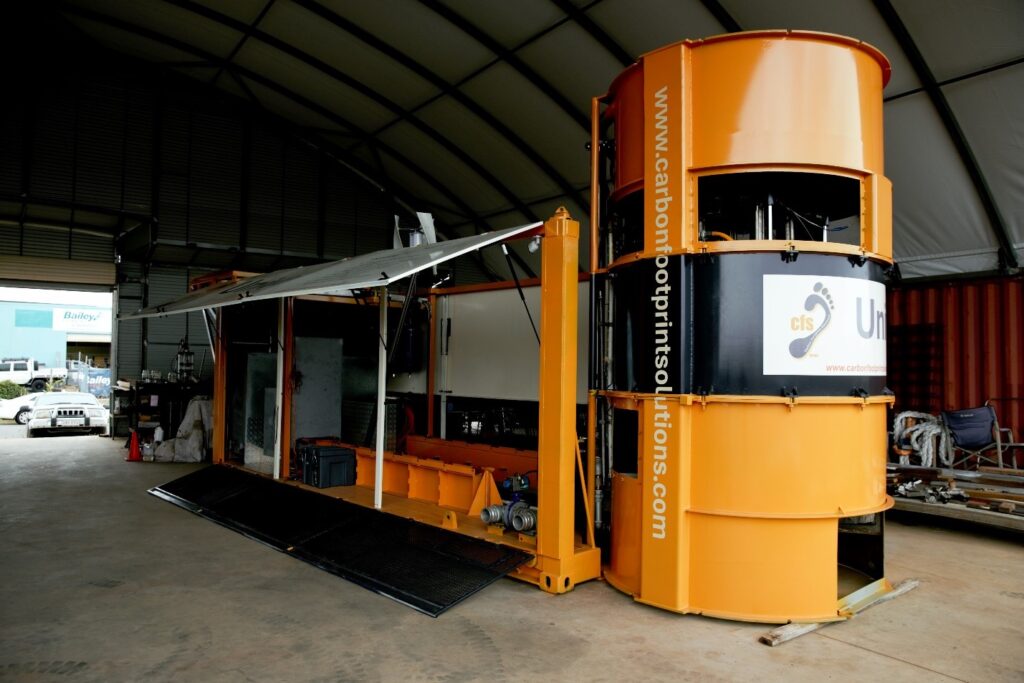
UNIVAT was created to change that. At its core, the system uses 100% natural flocculants and coagulants to treat virtually any industrial waste stream. This innovation allows for the rapid separation of waste from water. The result? Clean, reusable water and a dry, briquetted waste form that is easier and safer to handle, transport, and dispose of. In one integrated process, UNIVAT not only recovers water but also minimizes waste volume and environmental impact. The system offers industries a sustainable, efficient alternative to traditional waste management, solving both environmental and operational challenges at once.
Could you walk us through a recent success story where your solutions delivered measurable emissions reductions?
One of our recent success stories took place at a coal ship-loading terminal where we were invited to provide a more sustainable and cost-effective solution for managing coal fines, ultra-fine particles generated during coal handling. Traditionally, these fines were captured via runoff into catchment dams, then excavated, trucked (20 truckloads per day), and relocated to other ponds. This process not only required heavy water use sourced from city mains but also resulted in contaminated, lower-grade coal due to dirt ingress during excavation.
Our UNIVAT System offered a game-changing alternative. Using 100% natural separation technology, our system isolates only the coal fines – completely free of dirt – and immediately processes them into a dry, reusable form. Simultaneously, we recover the water used in the process, which is repurposed for dust suppression or other site operations. This eliminates the need for excessive water use and significantly reduces transportation, excavation, and operational costs.
The recovered fines, now uncontaminated, can be re blended directly into the sales stream, enhancing profitability. Moreover, reducing reliance on dams and trucks not only cuts emissions and fuel use but also simplifies site operations— delivering both economic and environmental wins.
Have you developed or partnered on any proprietary software or AI tools for carbon analytics?
We are actively developing proprietary software to enhance the performance and efficiency of our UNIVAT System. Our in-house data collection platform is specifically designed to monitor key operational parameters and carbon-related metrics in real time. This software is integrated with a custom-coded program that enables autonomous operation of the system, reducing the need for manual oversight and improving consistency in output.
One of the standout features of this technology is its remote accessibility. Operators and management teams can track system performance, emissions data, and water recovery rates from off-site locations. Additionally, the platform allows for real-time adjustments, which helps optimize system efficiency and respond to operational variables as they occur. This level of control not only streamlines workflow but also supports more accurate carbon accounting and analytics. By embedding smart technology into our system, we are creating a powerful tool that supports sustainability goals and enables data-driven decision-making for long-term environmental impact.
What role do science-based targets or net-zero pathways play in your client strategies?
Science-based targets and net-zero pathways are playing an increasingly vital role in shaping our clients’ sustainability strategies. With growing emphasis on ESG (Environmental, Social, and Governance) responsibilities, businesses are now more focused than ever on achieving measurable, long term environmental impact. We align our solutions with these evolving priorities by addressing one of the most pressing challenges our clients face: the management of stored waste effluents and industrial byproducts.
Our UNIVAT System enables clients to not only reduce their environmental footprint but also transform waste into a valuable resource. By helping clients recover clean water and repurpose waste into usable byproducts, we directly support their net-zero and circular economy goals. We also ensure that our approach complements their science-based targets by offering tangible metrics- such as emissions reductions, water reuse rates, and waste volume minimization that can be tracked and reported.
Ultimately, we work as partners in progress, helping clients move beyond compliance to create long-term environmental and operational value.
“From Waste to Worth – Transforming Effluents into Environmental Assets.”
What challenges do you face when helping legacy industries transition to low carbon operations?
Helping legacy industries transition to low-carbon operations comes with several challenges, primarily due to the massive environmental footprint left behind by decades of outdated waste management practices. One of the biggest issues we encounter is the existence of large, stagnant waste stream ponds that have accumulated over time. These sites not only pose environmental risks but also represent lost opportunities for resource recovery.
Our approach focuses on transforming these legacy waste streams into dry, manageable, and potentially valuable products. Using our UNIVAT System, we’re able to separate and repurpose water safely – either for reuse in industrial processes or safe discharge back into the environment. However, the scale of existing waste, resistance to change, and limited awareness of modern solutions can slow progress. Overcoming these barriers requires education, demonstration of value, and a commitment to building trust through proven results that align with both environmental and economic goals.
How do you see CFS UNIVAT contributing to the global net-zero movement by 2030?
By 2030, CFS UNIVAT aims to play a pivotal role in advancing the global net-zero movement through transformative waste stream management. Our mission is to establish the UNIVAT System as the global benchmark for best practices in waste treatment and resource recovery. We envision a future where industries no longer rely on ponds and dams to store waste, but instead adopt immediate, on-site treatment solutions that recover clean water and convert waste into valuable, reusable materials.
Our technology not only eliminates outdated and environmentally harmful practices but also supports circular economy models by creating new market opportunities from recovered byproducts. As we continue to expand our global footprint, we’re committed to helping industries reduce emissions, conserve water, and minimize their environmental impact. CFS UNIVAT is not just a system – it’s a catalyst for a new industrial culture that aligns operational efficiency with climate goals, driving meaningful contributions toward achieving net-zero targets worldwide.
Give us a synopsis about the founder and the team behind the success of CFS?
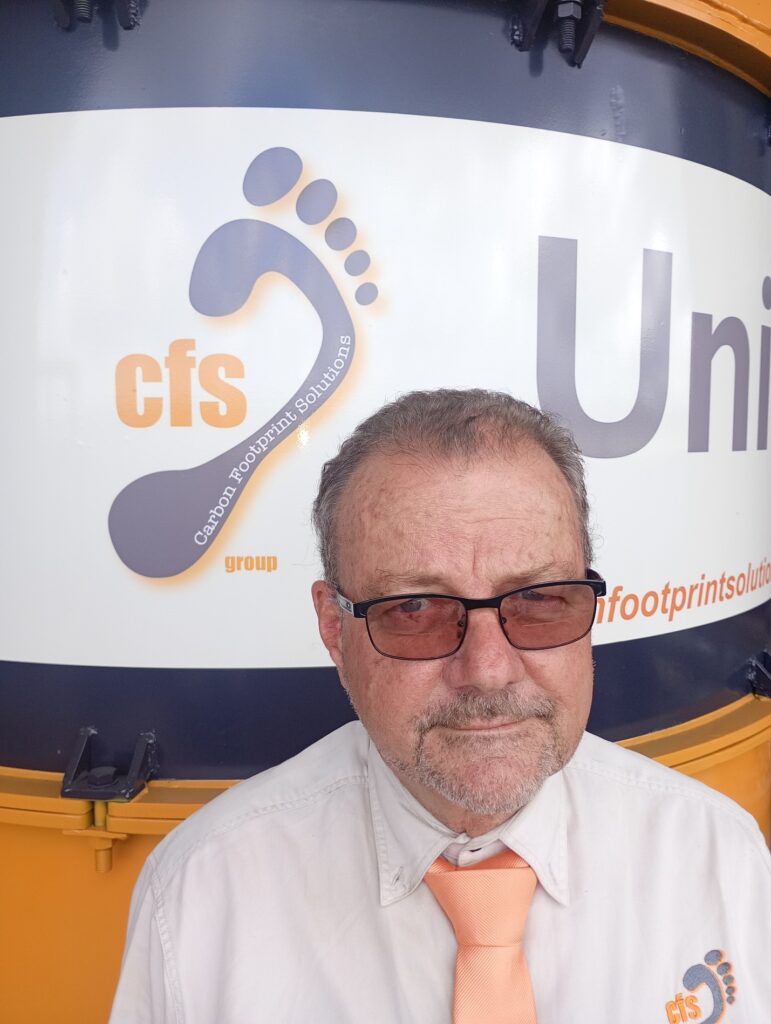
Tim has lived in Gladstone CQ, Australia for over 36 years and spent most of his career self-employed after a military apprenticeship and six years in the forces. Ten years ago, he developed a unique AGENT aimed at the clean water market and the liquidised waste streams. His experiments led to innovations that integrated multiple processes into a single tank, reducing costs, improving efficiency, and creating new applications for the AGENT.
Tim has experience in business start-ups that have grown into multi-million-dollar enterprises, as well as a background in technical fields and innovation. He will continue to play an active role in efforts to expand globally, particularly with initiatives aimed at addressing water clarity challenges. His approach to industrial liquid waste management prioritises practical and logical solutions for each situation.
Karen had been married to Tim for over 46 years and has worked for over 30 years in several start-ups through to full company strengths. Karen’s intuitive abilities combined with highly adaptive skill sets in Corporate Administration, Financial Controls, HR, and General Administrative functions has been instrumental in shaping the back-end structures to allow ‘go forward’ of these ventures. Unfortunately, she became a victim of Breast Cancer recently.
“Clean Water, Cleaner Future – Powering Net-Zero with Every Stream.”

Company Name : CFS UNIVAT
Website: https://www.carbonfootprintsolutions.com/
Management Team
Tim Straatmans | Founder and Inventor

