Rewriting Out-of-Home for the Speed of Modern Marketing
A conversation with the team behind AdQuick
What problem in the out-of-home space made it clear that this industry needed a technology-first rethink?
When we first spent real time inside the out-of-home ecosystem, the issue wasn’t interest or scale it was friction. Demand was there. Brands wanted the reach and real-world presence OOH delivers. But the way campaigns were planned and bought felt stuck in another era.
Inventory was fragmented. Pricing lacked transparency. Workflows depended heavily on manual coordination and insider knowledge. Even experienced teams needed weeks sometimes months to get campaigns live. That disconnect between modern marketing expectations and legacy execution made one thing obvious: this wasn’t a problem that incremental improvements would solve.
OOH didn’t need another tool layered on top of the old system. It needed infrastructure something that could unify supply, standardize buying, and bring outdoor media into the same operational reality marketers expect from digital channels today.
AdQuick dramatically shortens the time it takes to launch OOH campaigns. How does that change the way brands think about using this channel?
Speed changes everything. When OOH moves slowly, it gets treated like a long-term branding add-on something you plan far in advance and hope pays off eventually. When it moves fast, it becomes strategic.
With AdQuick, brands can activate campaigns in response to real moments a product launch, a cultural spike, a regional opportunity rather than locking decisions months ahead. That agility lets OOH sit alongside digital, social, and connected TV as part of an active, responsive media mix.
Instead of being static, OOH becomes dynamic. It stays relevant throughout a campaign lifecycle rather than being frozen at the planning stage. And once marketers experience that flexibility, OOH stops being an afterthought and starts showing up earlier in the conversation.

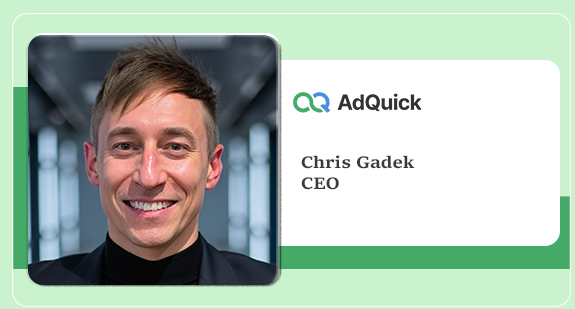
Chris Gadek, CEO
You now work with more than 1,700 media owners globally. How do you maintain consistency and quality at that scale?
Scale only works when it’s supported by standards. We’ve invested heavily in normalized data models, consistent buying workflows, and strong operational checks that sit behind every campaign.
At the same time, we’re careful not to flatten the market. Local media owners bring expertise that matters audience nuance, placement context, on-the-ground insight. Our platform isn’t designed to erase that complexity, but to translate it.
The balance comes from combining automation with human oversight. Technology handles standardization and speed; relationships and experience ensure quality. That’s how we deliver reliability for national brands without losing what makes OOH effective market by market.
Measurement has long been a challenge for offline media. How are you helping advertisers connect OOH to real outcomes?
Our focus has always been accountability not just reporting for reporting’s sake, but insight that actually informs decisions.
With tools like AdQuick Analytics Cloud, we help brands understand how exposure connects to tangible outcomes such as store visits, website traffic, and conversions, using privacy-safe, aggregated data. Just as important, we place OOH within the broader media picture.
Instead of asking, “Did OOH work?” marketers can ask, “How did it perform alongside everything else we ran?” That shift matters. Measurement becomes a planning tool, not a post-campaign scorecard.
Partnerships play a big role in how platforms scale. How do collaborations shape AdQuick’s direction?
Partnerships aren’t an add-on for us they’re foundational. Working closely with major media owners like Clear Channel Outdoor ensures our platform reflects the realities of premium inventory and evolving formats.
On the buy-side, integrations with leading DSPs allow OOH to plug directly into workflows marketers already use. That’s critical. Adoption happens faster when tools meet people where they are, rather than forcing entirely new processes.
These collaborations don’t just benefit AdQuick. They help move the entire category forward by aligning OOH more closely with how modern media is planned and bought.
OOH has traditionally been relationship driven. How has leadership balanced trust with rapid growth?
From day one, our leadership has been clear: growth only matters if trust keeps pace. Technology can accelerate transactions, but credibility is what sustains them.
That philosophy shows up everywhere in how we prioritize product decisions, how we communicate when things get complex, and how we support campaigns end-to-end. Long-term relationships matter just as much as speed.
Leadership sets that tone deliberately. Transparency, follow-through, and respect for partners aren’t optional values; they’re operational principles. That mindset is what allows us to scale without losing the human foundation this industry still depends on.
Looking five to seven years ahead, how do you see out-of-home evolving and where does AdQuick fit?
Out-of-home is moving toward being always-on, integrated, and measurable less siloed, more responsive, and more connected to real-world behavior. As cities become more data-aware and screens more dynamic, the opportunity for OOH to link brand and place will only grow.
Our ambition is simple, but significant: to be the operating system that makes that complexity manageable. The platform brands turn to when they want OOH to work with the same clarity and confidence as any other channel.
Not just at scale but at a higher standard. One where planning is simpler, execution is faster, and trust is built into the system itself.